Call Us: +91 8697619804
Follow Us:


Call Us: +91 8697619804
Follow Us:
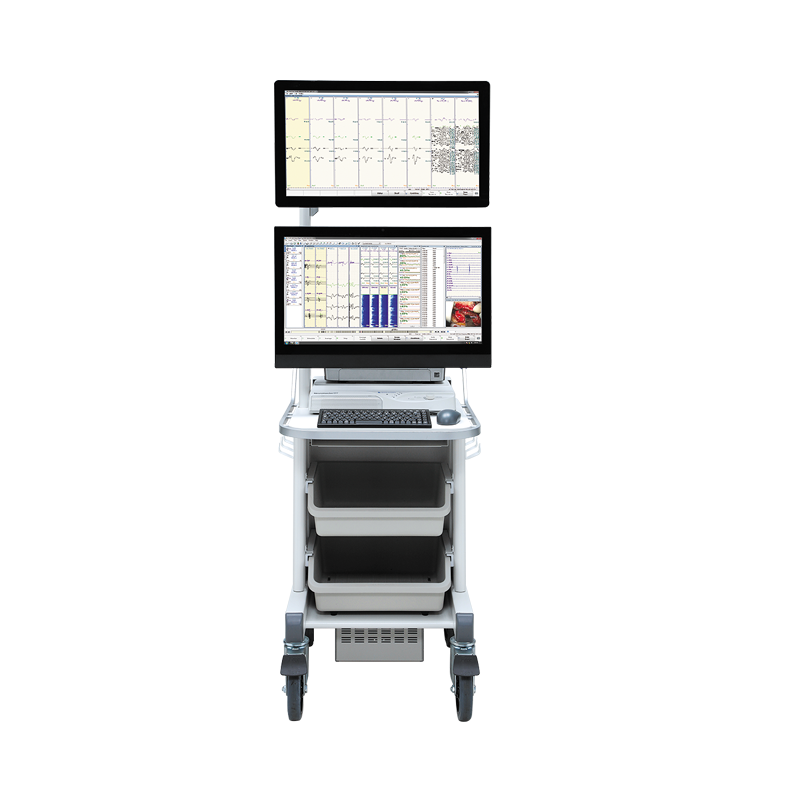
“IOM (MEE 2000) is an indomitable giant in the world of intra-operating monitoring systems.”
IOM MEE 2000 system delivers reliable and comprehensive intraoperative neurophysiological monitoring for modern operating rooms. It supports fast decision-making during complex surgical procedures. As a result, clinicians can monitor neural integrity without compromising patient safety.
Moreover, the system operates effectively in high-pressure and unpredictable surgical environments. Because intraoperative monitoring demands accuracy and stability, MEE 2000 focuses on consistent signal quality and dependable performance. Therefore, it supports continuous monitoring even in electrically noisy operating rooms.
In addition, IOM MEE 2000 collects SSEP, ABR, EMG, EEG, and TcMEP signals using a 32-channel ultra-quiet amplifier. This design minimizes noise while preserving signal clarity. As a result, clinicians receive precise and interpretable data throughout surgery.
Furthermore, the system uses Nihon Kohden’s Neurofax software to remount channels and trend patient data efficiently. Consequently, clinicians can review results quickly, either locally or through remote viewing software. This capability improves workflow and supports timely clinical decisions.
EEG monitoring displays up to 32 channels simultaneously. The system allows continuous or periodic data storage, while users can adjust display span and layout easily. Therefore, monitoring remains flexible and tailored to surgical needs.
Additionally, the EP window displays up to 32 evoked potential waveforms across 16 display areas. It shows baseline, current, and previous waveforms together with montage, time, average, and intensity values. As a result, clinicians can compare changes clearly during procedures.
EMG monitoring displays up to 32 waveforms and also records stimulation events. Meanwhile, the event window logs time-stamped comments and up to 50 preprogrammed events. Consequently, the system supports accurate documentation throughout the surgical workflow.
Finally, IOM MEE 2000 combines portability, flexible software design, and patient-centric monitoring into a single integrated solution. Because of this balanced design, it meets the demanding requirements of intraoperative neuro monitoring across multiple surgical specialties
References:

SK Health Care is a start-up company focused in Critical Care, Respiratory, Neonatal Care and Emergency segment in the healthcare Industry primarily in Eastern India including West Bengal, Sikkim, North Eastern States (Private and Government Sector) with a desire to expand our operation to other adjacent States &countries like Bangladesh, Nepal, Bhutan etc
© Copyright 2020. All right reserved.
Powered By Innovion Consultancy Services